
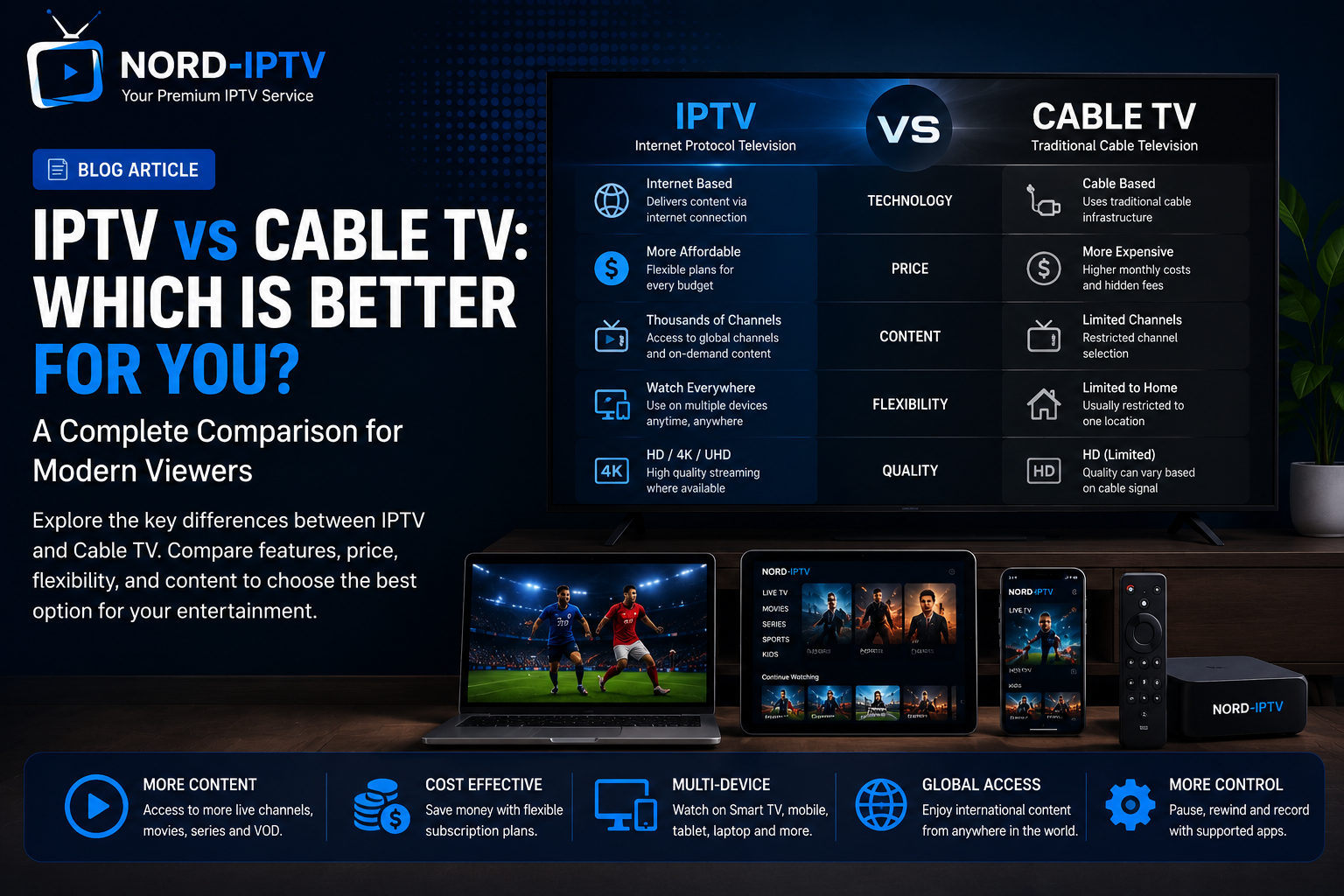
The way people watch television has changed significantly. Traditional cable TV remains familiar to many households, while IPTV provides another way to access television and entertainment through an internet connection.
But what is the difference between IPTV and cable TV, and which option better fits your viewing habits? This guide compares the two technologies across flexibility, devices, content, streaming quality, and everyday convenience.
What Is IPTV?
IPTV stands for Internet Protocol Television. Instead of delivering television through a traditional cable or satellite connection, IPTV delivers compatible content over an internet connection.
Depending on the provider and subscription, viewers may be able to access live television, sports, movies, series, news, and international entertainment.
IPTV can also work across different compatible devices, including Smart TVs, smartphones, tablets, computers, and streaming devices.
What Is Cable TV?
Cable TV delivers television programming through a physical cable network connected to the home.
Subscribers typically receive a channel package and use compatible equipment supplied or supported by the television provider. Available channels, features, equipment, and pricing vary by provider and location.
Cable remains a practical option for viewers who prefer a traditional television setup.
IPTV vs Cable TV: What’s the Difference?
The biggest difference is how television content reaches your screen.
Cable TV relies on dedicated cable infrastructure, while IPTV uses an internet connection. This difference can affect device compatibility, installation, portability, channel availability, and the overall viewing experience.
With IPTV, compatible users may have greater flexibility to watch on different screens without relying on a single traditional television connection.
Device Compatibility
One advantage of IPTV is its potential compatibility with multiple device types.
Depending on your IPTV service and applications, you may be able to watch on Smart TVs, Android devices, iPhone and iPad, Fire TV, Apple TV, computers, tablets, and compatible streaming boxes.
Traditional cable TV is generally centered around the home television setup, although many cable providers now offer their own streaming applications and online viewing features.
Streaming Quality
Both IPTV and cable TV can provide high-quality video.
With IPTV, quality depends on factors including your internet connection, device, application, provider, and source content. HD, Full HD, and 4K may be available when supported.
Cable quality can depend on the provider, package, equipment, and local infrastructure.
Neither technology automatically guarantees a particular resolution, so it is important to check what your chosen service actually provides.
Content and Entertainment
Content availability varies significantly between providers.
IPTV subscriptions may include combinations of live TV, sports, movies, series, news, kids’ programming, and international channels.
Cable companies also offer different channel packages and may provide premium channels or on-demand libraries.
When comparing services, focus on the channels and entertainment you actually want rather than simply choosing the option with the largest advertised selection.
Flexibility for Modern Viewers
IPTV can be attractive for households that use multiple types of connected devices.
A viewer might prefer a Smart TV in the living room, a tablet elsewhere in the home, or another supported streaming device. Actual simultaneous-streaming limits and device policies depend on the subscription provider.
This flexibility can make internet-based television convenient for modern viewing habits.
Internet Connection Matters
Because IPTV relies on the internet, network quality plays an important role in the viewing experience.
An unstable connection can cause buffering, reduced picture quality, or interruptions. A reliable home network and a strong Wi-Fi or Ethernet connection can help provide smoother playback.
Cable television does not rely on your home internet connection for conventional TV delivery, which may be an advantage in situations where internet service is unreliable.
Which Option Should You Choose?
The best choice depends on your needs.
Cable TV may suit viewers who prefer a conventional home television package and want television delivery that is independent of their internet connection.
IPTV may appeal to viewers who value compatible multi-device access, internet-based streaming, and flexible entertainment options.
Before subscribing, compare device compatibility, available content, pricing, support, connection requirements, and service terms.
Explore Nord IPTV
Nord IPTV is designed for viewers looking for a flexible internet-based streaming experience across compatible devices.
Whether you prefer watching on a Smart TV, Android device, Apple TV, Fire TV, smartphone, tablet, or computer, you can explore the available Nord IPTV plans and choose an option suited to your entertainment setup.
Discover Nord IPTV and enjoy a modern approach to watching available live television and entertainment.